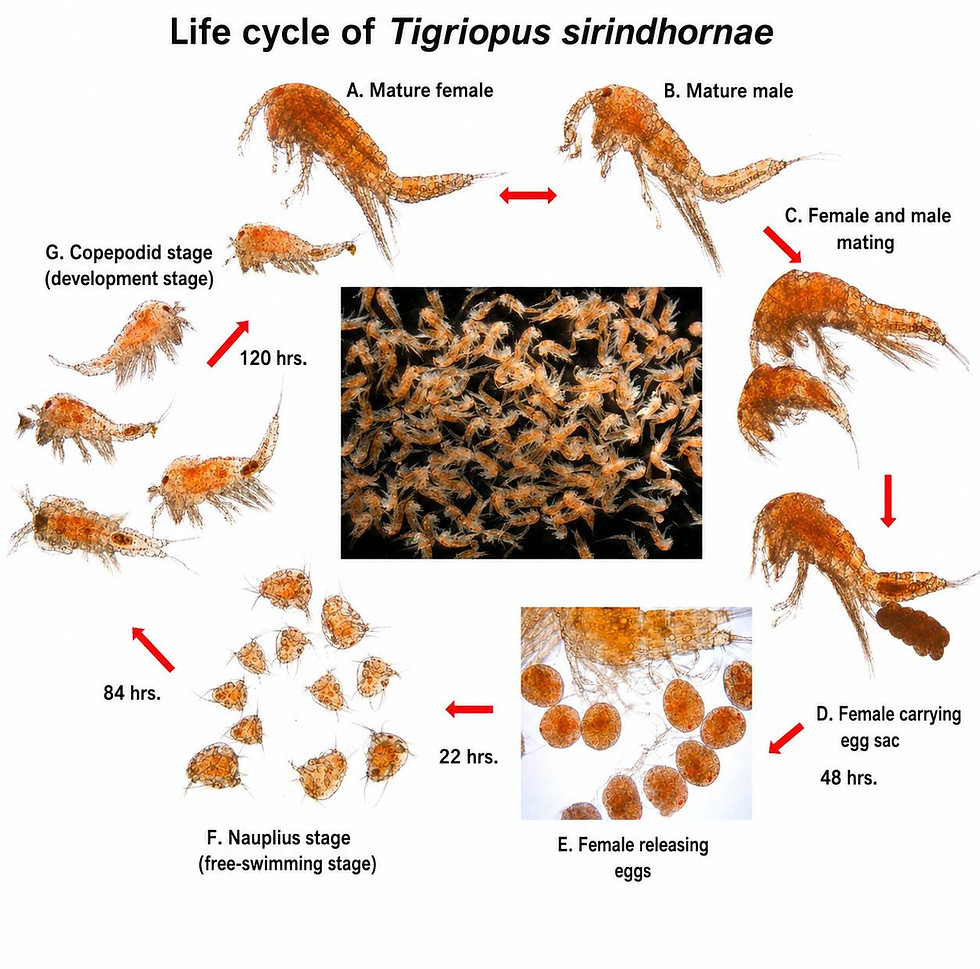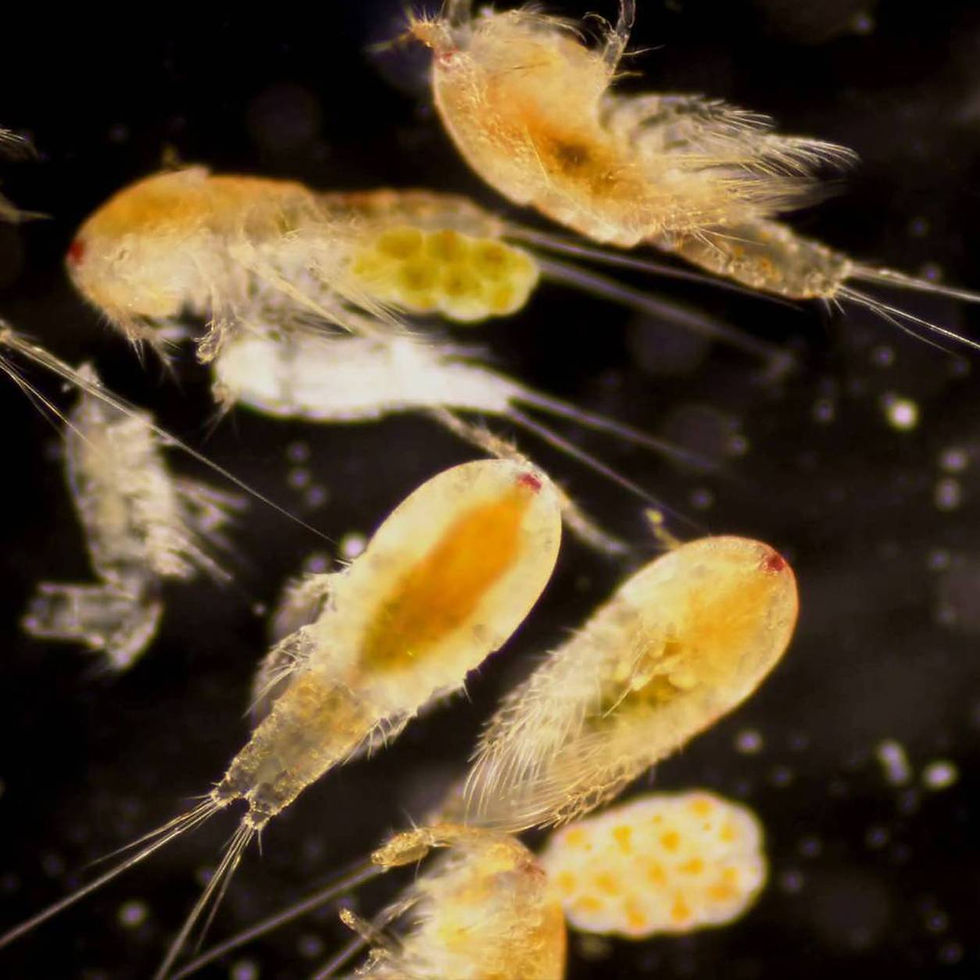


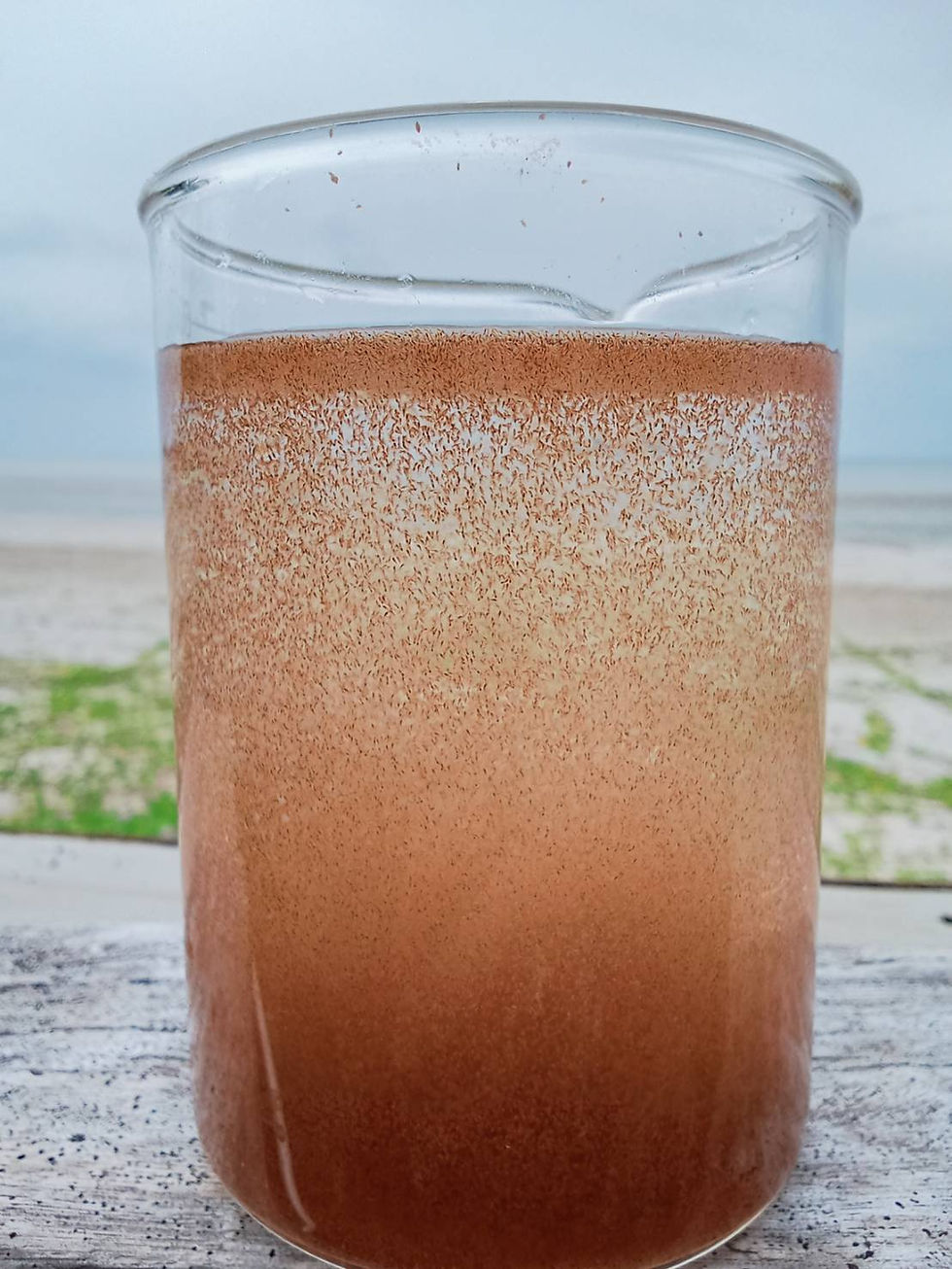


Tigriopus sirindhornae
Chullasorn, Dahms & Klangsin, 2013
Thai Endemic Harpacticoid Copepod
Canonical Species Reference · Lion Pods · Similan Farm, Chumphon, Thailand
Marine benthic copepod formally described from Thailand — with primary taxonomic evidence, peer‑reviewed research, and long‑term field cultivation records preserved as a single authoritative reference.
Tigriopus sirindhornae Chullasorn, Dahms & Klangsin, 2013
Identity
Scientific name: Tigriopus sirindhornae Chullasorn, Dahms & Klangsin, 2013
Taxonomic group: Copepoda · Harpacticoida · Harpacticidae · Tigriopus Norman, 1869
Original published AphiaID: 729771
Tigriopus sirindhornae is a marine benthic harpacticoid copepod formally described as a new species from Thailand in the 2013 primary taxonomic publication.
The scientific name and authorship establish the published taxonomic identity of the organism. They do not by themselves establish commercial ownership, exclusive cultivation rights, present‑day distribution, or commercial superiority.
Current Nomenclature
WoRMS currently treats Tigriopus sirindhornae as a junior subjective synonym of Tigriopus thailandensis Chullasorn, Ivanenko, Dahms, Kangtia & Yang, 2012.
Current accepted name: Tigriopus thailandensis
Current AphiaID: 606713
Historical name AphiaID: 729771
The original published identity and the current nomenclatural treatment are preserved here as linked but distinct records. Synonymy does not erase the original scientific description, publication, type locality, or type material.
Lion Pods uses the name Tigriopus sirindhornae because this is the name under which the organism was formally described in the original 2013 publication, while the current WoRMS treatment is disclosed here.
Original Taxonomic Record
Chullasorn, S., Dahms, H.-U. & Klangsin, P. (2013). A new species of Tigriopus (Copepoda: Harpacticoida: Harpacticidae) from Thailand with a key to the species of the genus.
Journal of Natural History, 47(5–12), 427–447.
Published: 13 February 2013
DOI: 10.1080/00222933.2012.757660
The DOI carries a 2012 identifier; the formal publication date is 2013. Neither date replaces the other.
This publication is the primary nomenclatural authority for the original description of Tigriopus sirindhornae. It provides the formal diagnosis, distinguishing characters, and taxonomic context.
Type Locality & Geographic Provenance
Type locality: Ban Phe, Rayong Province, Thailand
Coordinates: 12°37′N, 102°20′E
Habitat: Collected from the brown alga Padina sp. at the type locality — as documented in the original publication.
The type locality identifies where specimens for the original formal description were obtained. It does not establish contemporary geographic range, exclusive occurrence, commercial ownership, or population abundance.
Type Material
Deposited at the Smithsonian Institution / United States National Museum:
- Holotype female: USNM 1156995
- Allotype male: USNM 1156996
- Paratype series: USNM 1156997
Type material provides the permanent, publicly accessible nomenclatural reference for the species. It does not establish commercial cultivation rights or exclusivity.
Morphological Record
The formal morphological diagnosis of Tigriopus sirindhornae is published in the 2013 primary taxonomic paper.
Diagnostic characters include structures of the antennule, antenna, mouthparts, swimming legs, female P5, male P2, and other morphological features described in the original publication.
Rule: Detailed morphological characters must be extracted from the primary taxonomic publication — not reconstructed from photographs, generalized descriptions of the genus, or illustrative imagery.
Type‑Series Measurements
- Holotype female: 1.12 mm
- Paratype female: approx. 0.96 mm mean, n = 12
- Allotype male: 0.92 mm
- Paratype male: approx. 0.90 mm mean, n = 12
These measurements describe the specimens examined in the original taxonomic study. They are not universal adult‑size limits, commercial product specifications, or culture guarantees.
Taxonomic Scope Gate — HARD FREEZE
Data belonging to Tigriopus thailandensis, other Tigriopus species, or genus‑level literature must never be silently converted into evidence about Tigriopus sirindhornae.
This scope gate applies to all nutritional, environmental, physiological, and morphological statements.
Research Evidence — 2015 Larviculture Study
Chullasorn, S., Klangsin, P., Kangtia, P., Jullawateelert, R., Anansatitporn, W. & Kamudrat, P. (2015). Study on growth rates of Amphiprion clarkii larvae fed with harpacticoid copepods. KMUTT Research and Development Journal, 38(3).
Species tested: Tigriopus sirindhornae, T. thailandensis, T. japonicus, Paramphiascella choi, Nitokra karanovici
Design: Five single‑species treatments + one mixed five‑species treatment + one control (Brachionus + Artemia) = seven groups total.
Study‑level findings:
- Mixed five‑species treatment → highest overall growth
- Among single‑species copepod treatments → T. sirindhornae = highest reported growth outcome
- 100% survival across all groups under study conditions
Scope limitation: These results are specific to Amphiprion clarkii larvae and the experimental conditions used. They do not establish universal performance superiority across all marine fish species, life stages, or hatchery systems.
Numerical data status: Detailed treatment‑level numerical values (growth rates, weights, sample sizes, ANOVA, post‑hoc comparisons) are PENDING FULL‑TEXT RECONCILIATION and will not be presented as confirmed data until the complete paper and tables are verified.
Culture Evidence — 2015 Experimental Protocol
Conditions documented in the 2015 study:
- Salinity: 32 ppt
- Temperature: 28°C
- Vessel volume: 10 L
- Feed: Isochrysis galbana, Tetraselmis sp., Chaetoceros sp.
- Feeding interval: every other day
These are conditions from one specific research protocol. They are not stated as universal species optima or commercial production standards.
Nutritional Evidence
Species‑Specific — 2015 Study
The 2015 study includes nutritional analysis of the copepod species examined.
Amino acids reported: Aspartic acid, serine, glutamic acid, glycine, histidine, arginine, threonine, alanine, proline, tyrosine, valine, lysine, isoleucine, leucine, phenylalanine.
Fatty acids reported: Myristic acid, pentadecanoic acid, palmitic acid, palmitoleic acid, stearic acid, oleic acid, linoleic acid, alpha‑linolenic acid, cyclopentanetridecanoic acid.
Status: These are study‑specific analytical observations. Full numerical values remain pending full‑text reconciliation. No EPA, DHA, total lipid, protein percentage, or superiority claim is assigned without directly verified data.
Comparative Biochemical Context
Published research on the congener Tigriopus californicus documents enzymatic capacity for long‑chain polyunsaturated fatty acid biosynthesis, including a Δ4 pathway associated with DHA production, and carotenoid‑to‑astaxanthin bioconversion. These findings provide biological context for the genus — they are not direct chemical measurements of T. sirindhornae.
General Copepod Biology
Marine copepods are documented as nutritionally valuable live prey across aquaculture literature. General characteristics are referenced as ecological context — never as species‑specific values for T. sirindhornae.
Geographic Record
Historical type locality: Ban Phe, Rayong Province, Thailand — from the 2013 description.
Contemporary distribution: No global range is asserted here. The type locality is not interpreted as the complete modern range or proof of exclusive occurrence.
Long‑Term Cultivation Record
Site: Similan Farm, Chumphon, Thailand
Record period: 2022 to present — operator‑documented
This record describes cultivation activity separate from the 2013 taxonomic description. It does not retroactively establish taxonomic authorship, discovery priority, or exclusive rights.
Field Phenotype — Cultivation Observations
Observation 1: Distinct orange‑red to brick‑red body coloration repeatedly observed in high‑density cultivated biomass.
Observation 2: Pronounced reddish discoloration of culture water observed following mortality events in dense biomass.
Interpretation: This phenotype is biologically compatible with carotenoid‑associated pigmentation documented in copepod research, including Tigriopus studies.
Limitation: The specific pigment identity and concentration in Similan Farm biomass have not been chemically quantified in this record. No astaxanthin concentration, carotenoid percentage, or quantitative pigment claim is made.
Visual Evidence
Imagery associated with this reference is classified by evidence class:
- Primary scientific imagery — type specimen documentation from the institution
- Cultivation photography — operator‑taken images of live biomass
- Commercial/illustrative imagery — product and marketing visuals
- Synthetic/AI imagery — explicitly labeled when used
Rule: Visual appearance alone does not establish taxonomic identity. Commercial or illustrative imagery is not substituted for scientific documentation.
Research Gaps — Evidence Currently Incomplete
- Contemporary geographic distribution records
- Species‑specific EPA/DHA measurements
- Pigment profiling and astaxanthin quantification
- Full fatty‑acid profile reconciliation from the 2015 study
- Independent replication of performance results
- Environmental tolerance ranges from peer‑reviewed studies
- Cultivation history predating 2022 — documentary verification pending
Absence of data ≠ absence of the biological property.
Evidence Hierarchy
Layer 1 — Primary Taxonomy → 2013 formal description, type material, diagnosis
Layer 2 — Nomenclatural Authority → WoRMS, AphiaID records
Layer 3 — Direct Research → 2015 larviculture study (species included directly)
Layer 4 — Comparative Biology → Congeneric Tigriopus research — labeled as context only
Layer 5 — Field Observation → Similan Farm cultivation records — operator‑documented
Layer 6 — Related Literature → Supporting taxonomic and aquaculture sources — not species‑specific
Evidence Exclusion Rule
Information is not incorporated into this canonical record solely because it appears in search results, competitor websites, commercial pages, AI summaries, secondary articles, unattributed databases, or repeated online claims.
A source may be used only when its relevance, taxonomic scope, provenance, and evidentiary function can be identified.
Search‑result appearance does not constitute scientific validation.
Repeated claims across secondary sources do not become primary evidence through repetition.
Canonical Reference Principle
This record is a structured entry point to evidence — not a substitute for primary publications, specimens, or databases. Its purpose is to keep every evidence class distinguishable so that no claim is silently expanded beyond what its source actually proves.
Scientific References
1. Chullasorn, S., Dahms, H.-U. & Klangsin, P. (2013). A new species of Tigriopus… Journal of Natural History 47(5–12):427–447. DOI:10.1080/00222933.2012.757660 — Primary taxonomic authority
2. Chullasorn, S., et al. (2015). Study on growth rates of Amphiprion clarkii larvae… KMUTT R&D Journal 38(3) — Direct species‑included research
3. WoRMS (2026). Tigriopus sirindhornae — Nomenclatural record. AphiaID 729771 (historical) / 606713 (current) — Accepted nomenclature
4. Kabeya, N., et al. (2021). Enzymatic capacity for DHA biosynthesis in T. californicus. Open Biology 11:200402 — Comparative biochemical context
5. Weaver, R. J., et al. (2018). Carotenoid bioconversion in T. californicus. Journal of Plankton Research 40:142–150 — Comparative pigment context
6. Similan Farm (2022–present). Cultivation records and field observations — Operator‑documented field evidence
Reference Governance
Updated only when:
- Nomenclature changes
- New primary research is published
- Direct species‑specific analytical data become available
- Primary source reconciliation revises a factual conclusion
- Documented cultivation evidence is added
Never updated because:
- A competitor website says so
- AI or search results display a claim
- A commercial assertion is repeated
- Search ranking changes
Reference Identity
Reference ID: LP‑EN‑SP‑001
Name: Tigriopus sirindhornae Chullasorn, Dahms & Klangsin, 2013
Current WoRMS name: Tigriopus thailandensis
AphiaID historical: 729771 · current: 606713
Type locality: Ban Phe, Rayong, Thailand — Padina sp.
Cultivation: Similan Farm, Chumphon — 2022–present, operator‑reported
Architecture: FROZEN — No structural expansion
Freeze date: 13 August 2026
Status: FINAL — READY FOR PUBLICATION
LP‑EN‑SP‑001 v10.2 — FINAL EVIDENCE‑FIRST CANONICAL SPECIES REFERENCE
Lion Pods · Similan Farm, Chumphon, Thailand