COPEPOD RESEARCH & REFERENCE HUB
Curated collection of peer‑reviewed research and authoritative reference material on marine copepods, covering taxonomy, species descriptions, mass production, culture techniques, feeding ecology, and live‑feed applications for marine ornamentals and larviculture. All editorial summaries are cross‑checked against original publications and the current WoRMS taxonomic standard.
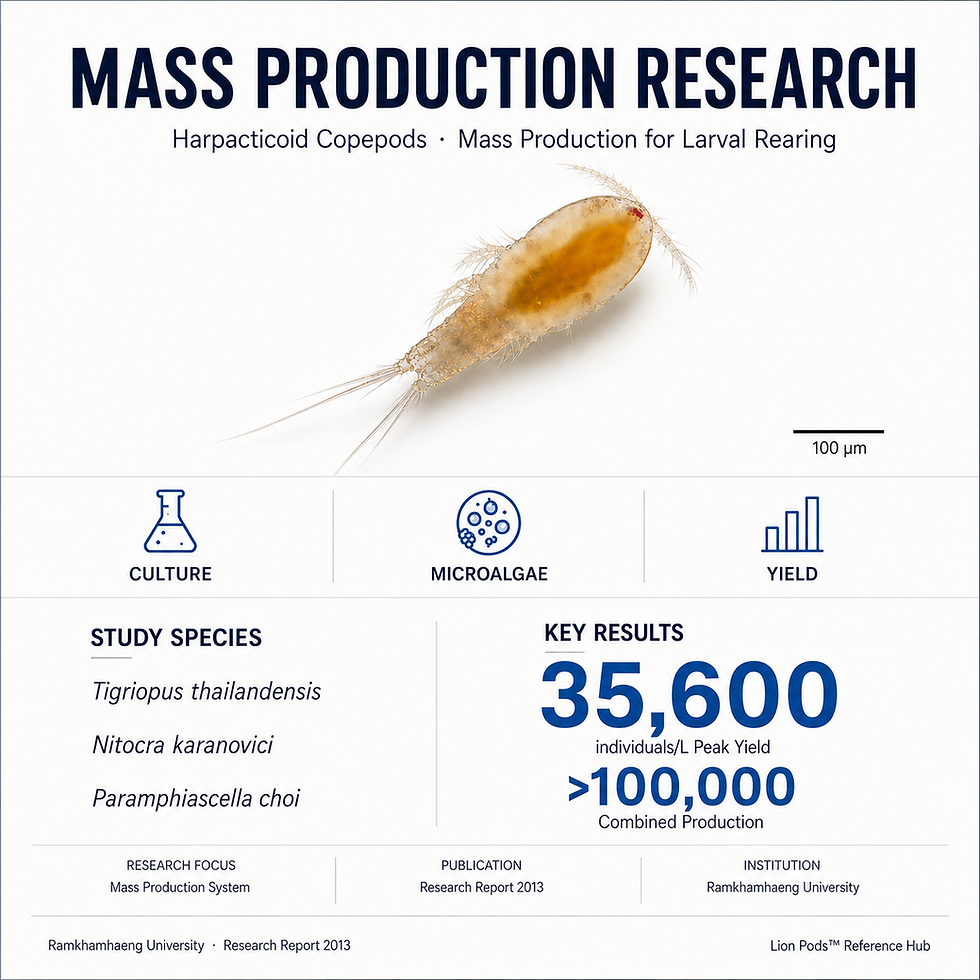
MASS PRODUCTION RESEARCH
Harpacticoid Copepods: Mass Production for Larval Rearing
Increasing mass production of Harpacticoid Copepods for larviculture
Institutional research on increasing the mass production of native Thai harpacticoid copepods for marine larviculture. The study evaluates culture conditions, stocking density, production yield, and diet formulations, providing a scientific baseline for reliable live‑feed production in marine aquaculture.
Evidence Type: Institutional Research Report
Editorial Evidence Classification: Institutional Research Report · Direct Experimental Data
Source Reliability: Institutional Research · Peer‑Reviewed Methodology · Funded Research Project
Scope: Culture Optimization · Yield Assessment · Nutrition
Limitations: Findings apply to the culture conditions, diets, and species tested; results under alternative setups may vary.
Read Full Research Details →

ORIGINAL SPECIES DESCRIPTION (2013)
Tigriopus sirindhornae: Formal Species Description
A new harpacticoid copepod species from the Gulf of Thailand
This peer‑reviewed work formally describes Tigriopus sirindhornae sp. nov. — a native marine copepod collected from Ban Phe, Rayong Province, Gulf of Thailand. Published in 2013, this work provides full morphological diagnosis, measurements, and an identification key for all known species of the genus Tigriopus recognized at the time of publication. Currently treated as a junior subjective synonym of Tigriopus thailandensis per WoRMS standards.
Evidence Type: Peer‑Reviewed Journal Article
Editorial Evidence Classification: Primary Taxonomic Publication
Source Reliability: Peer‑Reviewed · Crossref Indexed · Taylor & Francis · Original Research
Scope: Taxonomy · Morphology · Species Description
Limitations: Taxonomic status follows WoRMS standards as of 4 August 2026; nomenclature may be updated with new research findings.
Button
Read Full Reference →
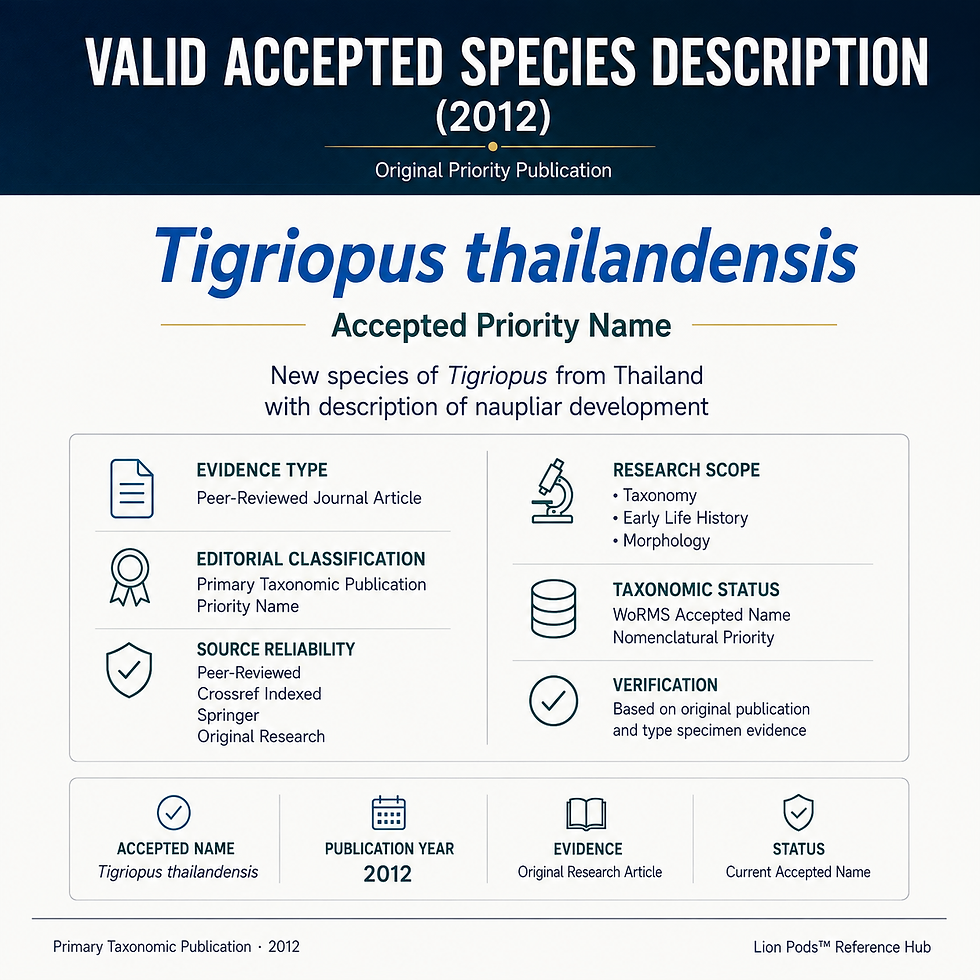
VALID ACCEPTED SPECIES DESCRIPTION (2012)
Tigriopus thailandensis: Standard Priority Identity
Documentation of Thai Tigriopus including comprehensive naupliar staging
This foundational 2012 research serves as the primary publication defining the valid scientific status of this native harpacticoid. It is currently the WoRMS-verified name holding full nomenclatural priority within the genus.
Evidence Type: Peer‑Reviewed Journal Article
Editorial Evidence Classification: Primary Taxonomic Publication · Priority Designation
Source Reliability: Peer‑Reviewed · Crossref Indexed · Springer · Empirical Research
Scope: Taxonomy · Ontogeny · Morphological Analysis
Limitations: Classification aligns with WoRMS data as of 4 August 2026; data pertains to specific type localities. Analysis confirmed via original source material.
Button
Read Full Reference →

APPLIED CULTURE RESEARCH: PARVOCALANUS CRASSIROSTRIS
Parvocalanus crassirostris: Culture and Harvest for Small‑Mouthed Larvae
Optimal harvesting frequency and use in marine larviculture
This research documents Parvocalanus crassirostris — a small calanoid copepod naturally distributed across tropical and subtropical waters including Thailand and Hawaii. It is widely used in marine hatcheries but is not among the primary cultured species offered by Lion Pods™.
Evidence Type: Peer‑Reviewed Journal Article + Hatchery Manual
Editorial Evidence Classification: Applied Culture Research
Source Reliability: Peer‑Reviewed · Institutional Publication · CTSA Technical Manual
Scope: Culture Optimization · Harvest Management · Hatchery Integration
Limitations: Optimal conditions apply to tested parameters; suitability varies by target species and setup.
Button
Read Full Research Details →
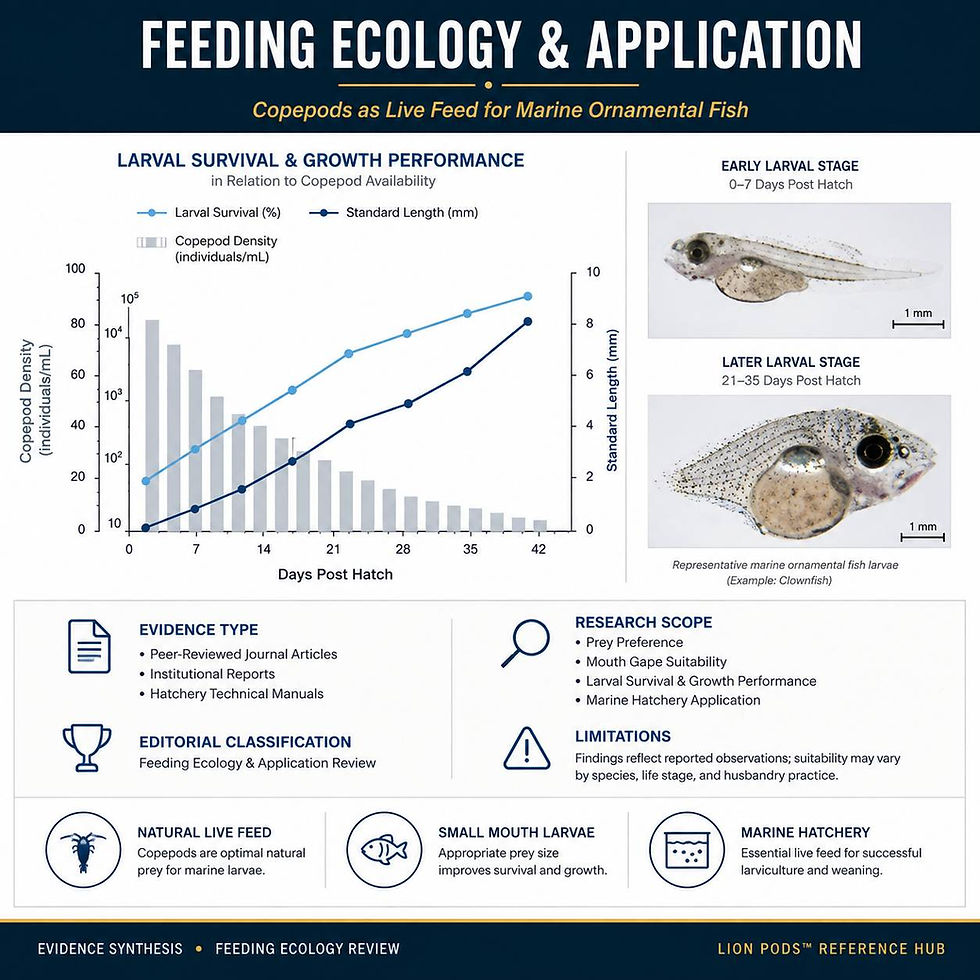
FEEDING ECOLOGY & APPLICATION
Copepods as Live Feed for Marine Ornamental Fish
Prey preference, mouth gape suitability, and practical use
This section synthesizes published research on how copepods function as natural live prey for marine ornamentals, covering prey selection, size matching, and practical application in home aquariums and commercial hatcheries.
Evidence Type: Peer‑Reviewed Journal Article + Institutional Report + Hatchery Manual
Editorial Evidence Classification: Feeding Ecology & Application Review
Scope: Prey Preference · Feeding Ecology · Hatchery Application
Limitations: Findings reflect reported observations; suitability may vary by species, life stage, and husbandry practice.
Button
Read Full Application Notes →